
Nottingham University Hospitals is still in a critical incident after flu cases rose from 14 to 60 in a week. Use 111, pharmacies or the urgent care centre.
Nottingham University Hospitals NHS Trust (NUH) is still in a critical incident. It was declared on Monday 23 November after a sharp rise in flu and COVID-19 cases. At 2pm on Wednesday 25 November the trust said the position had improved but its hospitals remained extremely busy. (Nottingham University Hospitals)
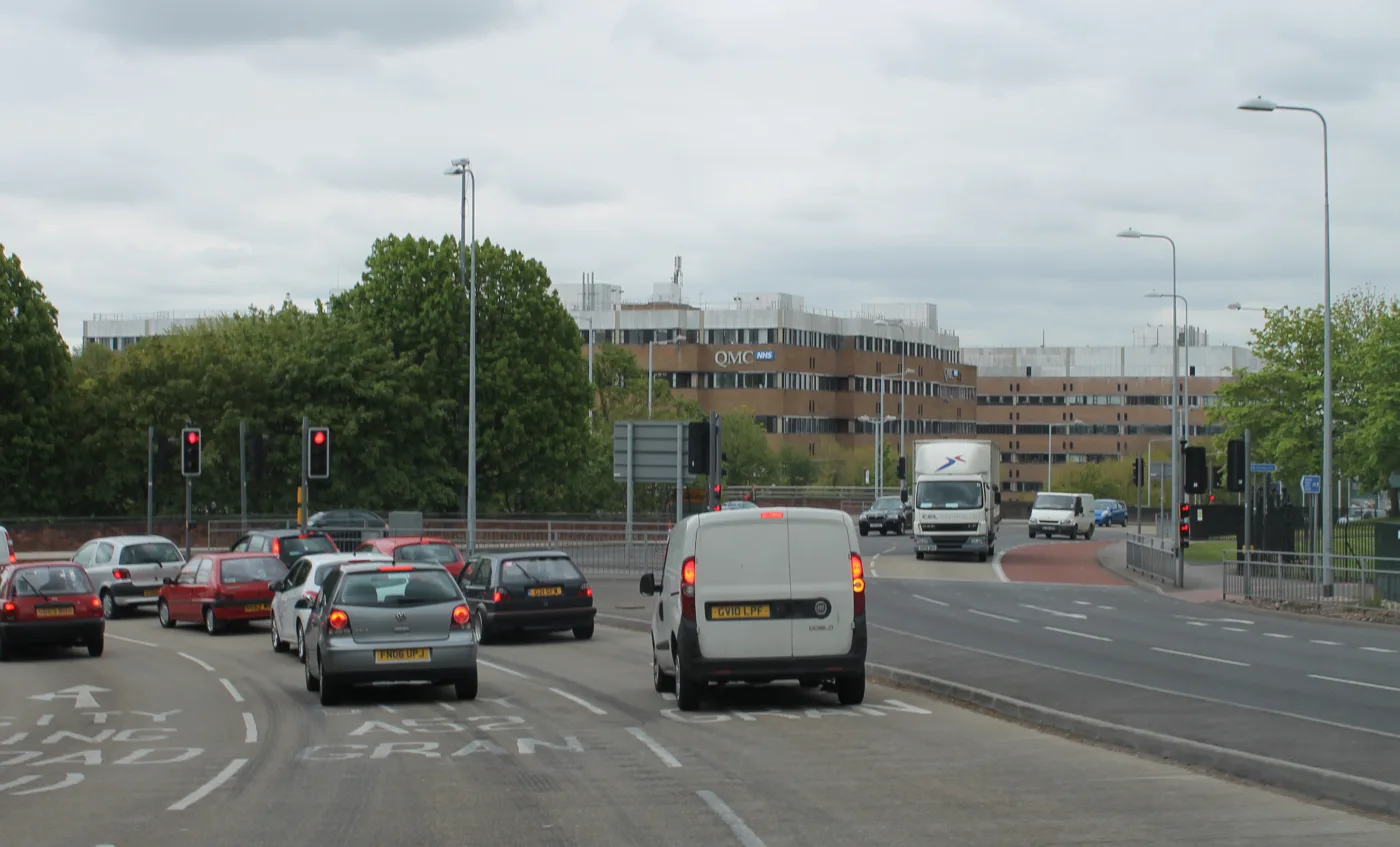
NUH runs the Queen’s Medical Centre (QMC) and City Hospital. The trust said the delays were worst in QMC’s emergency department.
Why the trust declared it
The trust set out the position on Monday:
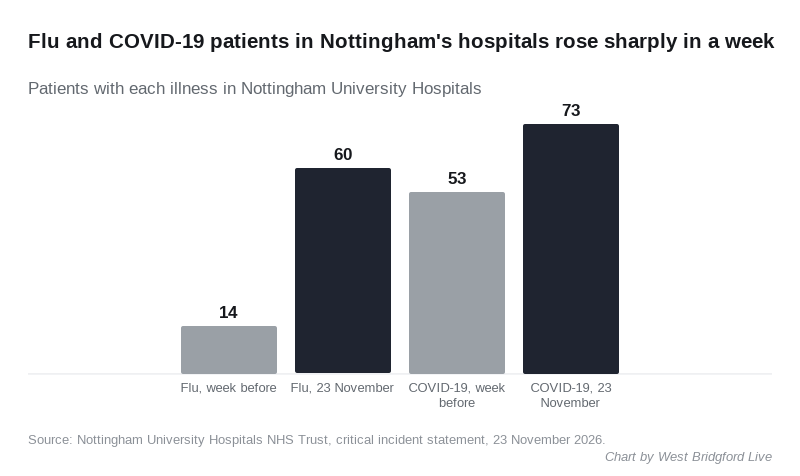
- Flu cases in its hospitals rose from 14 to 60 in a week.
- COVID-19 cases rose from 53 to 73 over the same week.
- There were around 200 patients in the emergency department.
- Patients were waiting in ambulances for up to four hours.
- Almost 100 patients were waiting for beds on wards.
- There was no free capacity in resus or major trauma.
Andrew Hall, the trust’s chief operating officer, said flu and COVID cases had “surpassed the predicted flu figures for this time of year” and were higher than at the same point last year.
Where things stood on Wednesday
On Tuesday morning almost 190 patients were still waiting in the emergency department. By Wednesday afternoon the trust said things were improving, but flu and COVID-19 cases were still rising.
The biggest problem now is getting people home. Mr Hall said around 180 patients on the wards were clinically fit to leave, more than 100 above the level the hospitals need to keep moving. On Monday that number reached 208.
He also thanked the public for using other services: fewer people were arriving at the emergency department. “This is absolutely the right thing to do,” he said, “but remind the public that they can still come to us in an emergency.”
What it means for you
The trust has asked for help in a few specific ways:
- Collect a relative early. If someone in your family is due to be discharged and needs a lift home, collect them as early in the day as you can. It frees a bed for someone waiting.
- Do not visit with symptoms. Stay away from the wards if you have flu or any other respiratory illness until you are better.
- Get a flu jab if you are eligible and have not had one yet.
- Keep 999 and A&E for emergencies: serious accidents and anything life-threatening.
For anything else, the trust points to three alternatives.
NHS 111, online or by phone, can tell you where to go.
The urgent treatment centre deals with injuries such as sprains, suspected fractures, cuts, bites and scalds, and waits are usually much shorter than in A&E. Nottingham’s is at Seaton House on London Road, next to the BBC building. The local NHS says it is open every day from 7am to 7pm, with no appointment needed. (NHS Nottingham and Nottinghamshire)
Pharmacies can treat many minor illnesses. More than 200 in Nottingham and Nottinghamshire offer the NHS Pharmacy First service for seven common conditions. The trust lists earache, shingles, sinusitis, impetigo, sore throats and urinary tract infections in women among them. Which ones you can get treated for depends on your age.
Have your say