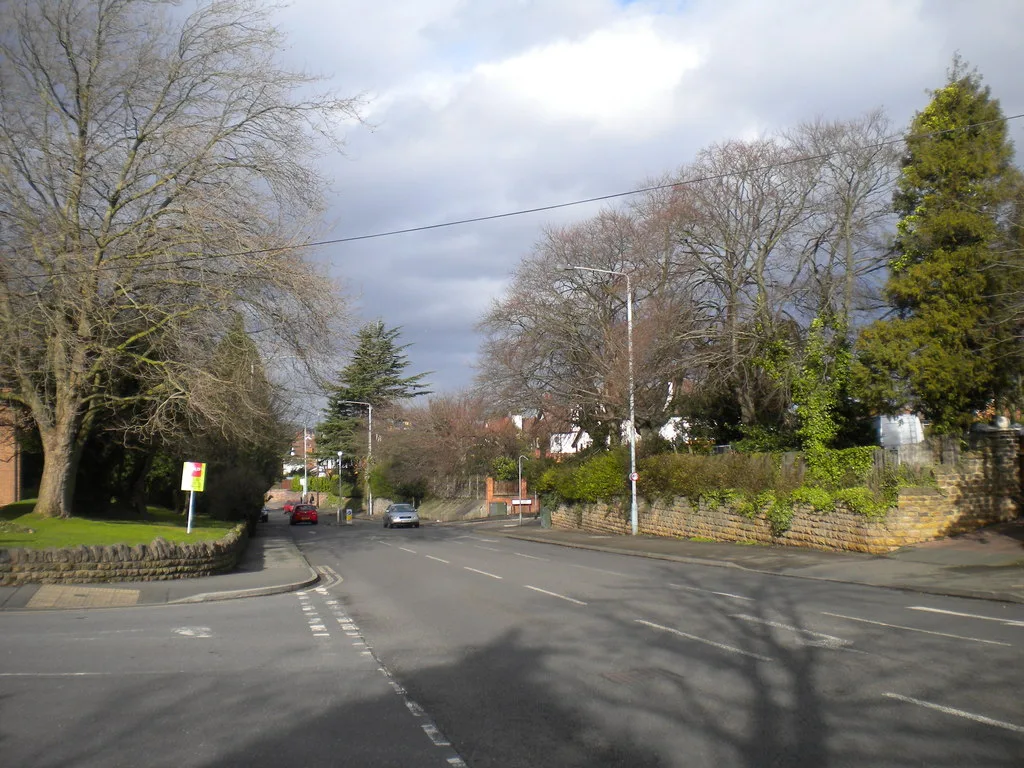
Melton Road, Loughborough Road and Carnarvon Road are all in Nottinghamshire's 2026/27 highways programme. Every one of the 36 Rushcliffe schemes, listed.
Thirty-six roads and footways across Rushcliffe are named in Nottinghamshire County Council’s highways maintenance programme for 2026/27, and nine of them are in West Bridgford and Edwalton. The list includes surface dressing on the A606 Melton Road, resurfacing on the A60 Loughborough Road, micro asphalt on Cromford Road and a full-length footway rebuild on Carnarvon Road.
The schemes are set out road by road, with their extents and a cost band for each, in Appendix 1a of the council’s capital and revenue programmes document. Added up on the council’s own bands, the committed Rushcliffe work is worth between £2.97m and £4.25m. One scheme, the A60 Loughborough Road resurfacing in West Bridgford, is still listed as cost “TBC”.
That sits inside a county-wide highway maintenance allocation of £51,369,000 for 2026/27, which the same document breaks down into carriageways, footways, bridges, drainage, street lighting, traffic signals, signs, safety fencing and rights of way. The council describes the wider effort as a record £181.25 million Highways Capital Maintenance Programme, and said on 4 August that August alone would bring 24 major resurfacing or machine-lay patching schemes, 44 further patch repairs, more than 70 surface dressing sites and micro asphalt on more than 150 roads.
What is happening in West Bridgford and Edwalton
Nine of the 36 schemes are on this side of the borough.
- A606 Melton Road, West Bridgford, surface dressing from Stamford Road to a point roughly 150m south of Blackbird Crescent. Cost band £150k to £200k, one of the larger Rushcliffe schemes.
- A60 Loughborough Road, West Bridgford, resurfacing or surface treatment from the Wilford Lane junction up to the Rugby Road junction. Cost TBC.
- A60 Loughborough Road, West Bridgford, surface dressing from the Wilford Lane junction to the Asda junction. £50k to £100k.
- Cromford Road, West Bridgford, micro asphalt over the whole road length. £10k to £25k.
- Carnarvon Road, West Bridgford, footway resurfacing over the full length. £100k to £150k.
- Adbolton Lane, West Bridgford, drainage improvement, carried over from the 2025/26 programme. £100k to £150k.
- Alford Road, Edwalton, micro asphalt from Leahurst Road to Wellin Lane. £50k to £100k.
- Wellin Lane, Edwalton, micro asphalt from Village Street to Alford Road. £25k to £50k.
- Lady Bay Bridge, drainage work under the bridge maintenance block. £25k to £50k.
One further local scheme is listed but not funded. A pedestrian crossing at B679 Wilford Lane and Bede Ling appears under Intelligent Transport Systems as a reserve scheme, at £25k to £50k. Reserve schemes are only built if something else in the block drops out, so it is not a commitment.
The three treatments, and why the difference matters
The programme uses three words for three quite different jobs, and knowing which one your road is getting tells you what to expect.
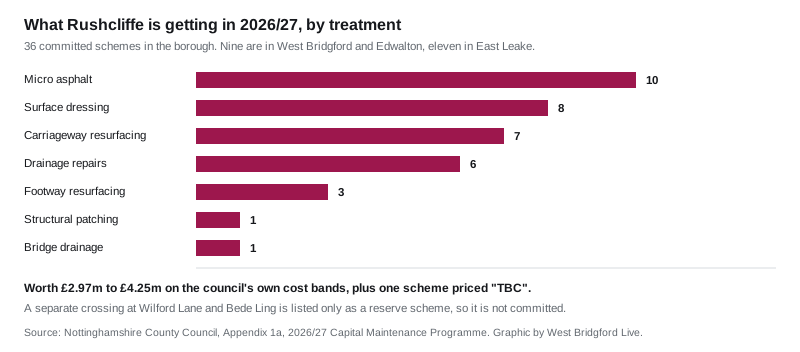
Resurfacing is the full job: the old surface comes off and a new one goes down. It is the most disruptive and the most expensive, which is why only seven Rushcliffe carriageways get it this year.
Surface dressing is, in the county’s own words, “spraying a coating of bitumen (a tar-like substance) onto the road surface followed by one or more layers of hard stone chippings”. It seals the road against water rather than rebuilding it. It is quick and cheap per mile, and it is why loose chippings and a reduced speed limit turn up afterwards: the council says it takes two or three days for the dressing to settle, that vehicles running carefully over it help it compact, and that it will sweep the road and footpaths once the chippings are down. Eight Rushcliffe roads are down for it.
Micro asphalt is the newest of the three on Nottinghamshire’s roads. The council calls it “a preventative maintenance treatment where a thin bitumen mix is applied to create a new layer over the existing road surface”, used on residential streets to prevent water ingress, potholes and cracks. Ten Rushcliffe roads are getting it, and seven of those ten are in East Leake.
East Leake gets more than anywhere else
Counted properly, East Leake has eleven of the borough’s 36 schemes, more than West Bridgford and Edwalton combined. Stonebridge Drive is being resurfaced from Gotham Road to a point about 15m past Carlton Crescent, and six streets tying into it get micro asphalt: Brickcliffe Road, Carlton Crescent, Fisher Close, Monks Meadow, Moore Close and Taft Leys Road. Stonebridge Drive itself also appears in the micro asphalt list. Angrave Road and Roulstone Crescent get footway resurfacing, and C33 Gotham Lane is down for surface dressing.
Elsewhere in the borough: the A60 Loughborough Road and Mere Way roundabout at Ruddington is being resurfaced whole; C51 West Leake Lane at New Kingston is the borough’s single biggest scheme at £500k to £600k; both of Bingham’s C217 routes, Long Acre and Grantham Road, and Nottingham Road, are down for surface dressing; C3 Langar Road at Barnstone is being resurfaced; and Morkinshire Crescent in Cotgrave and Lombard Street in Orston get resurfacing too. The A606 Melton Road at Upper Broughton, from the county boundary to the A46, was deferred into this year at £250k to £300k, as was Cotgrave Lane at Tollerton.
Six drainage schemes are spread across Costock, Kinoulton, Sutton Bonington, Bradmore, Tollerton and Adbolton Lane in West Bridgford. Costock’s is the biggest at £250k to £300k.
What it means for you
Check the treatment before you plan around it. A micro asphalt or surface dressing job on a residential street is usually a matter of days, with the road shut in short sections. A full resurfacing is longer and normally needs an overnight or multi-day closure.
Expect loose chippings and a reduced speed limit after surface dressing. That is normal and it is deliberate: traffic beds the chippings in. The council’s own advice is to keep to the posted limit on a newly treated road and never to overtake on one. If you are on the A606 Melton Road or the A60 Loughborough Road this year, that is the phase you will notice.
These are schemes, not dates. The document lists roads and extents, not a calendar. The county’s surface dressing programme page carries the provisional dates, and warns that the activity “is weather dependent and as such, the dates shown below are a guide and are subject to change”. For what is actually shut this morning, our West Bridgford roadworks and travel page lists the right place to look for each authority, which matters here because the A52, A46, A453 and M1 belong to National Highways and never appear in county listings.
If your street is not on the list, it is not scheduled this year. The same document also carries the draft programmes for 2027/28 and 2028/29, so it is worth searching those before assuming a road has been forgotten. Balmoral Avenue, Exeter Road and Sandringham Avenue in West Bridgford, and Queens Road in Radcliffe on Trent, all appear in the 2027/28 draft.
One caveat on the whole document. Local government reorganisation confirmed in July 2026 splits Rushcliffe from 1 April 2028, with West Bridgford heading into a new Greater Nottingham unitary. The 2028/29 column of this programme is therefore a plan drawn up by a council that will not be the highway authority for the whole of the borough by the time it lands.
Related: West Bridgford planning applications and house prices across Rushcliffe.
Have your say
We read every message. To comment on this story, email the newsdesk and we may publish a selection of responses: hello@westbridgfordlive.co.uk.