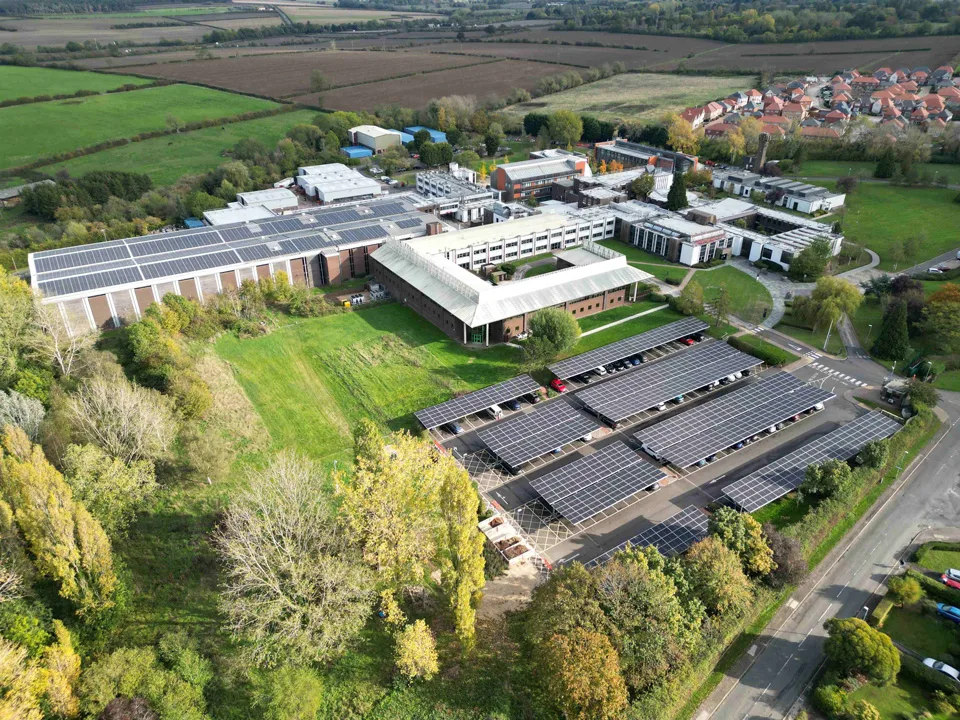

The British Geological Survey moved its first 30 staff to Keyworth in October 1976. Fifty years on, about 500 work there, beside 600km of stored rock core.
The British Geological Survey has marked 50 years at its headquarters in Keyworth.
The first 30 members of staff moved to the village in October 1976, from offices in London and Leeds. Around 500 people work on the site today, the survey said in its anniversary article on 28 October.
To mark it, the BGS invited around 70 former staff back to Keyworth. They toured the newer buildings and saw a temporary exhibition of archive photographs from the five decades.
From teacher training college to national survey
The site was not built for geology. It was Mary Ward College, a teacher training institute, which came on the market in February 1975.
The Institute of Geological Sciences, as the survey was then called, completed the purchase on 1 September 1976. The aim, the survey says, was a centralised office to suit a multinational geological survey. It took the name British Geological Survey in 1984.
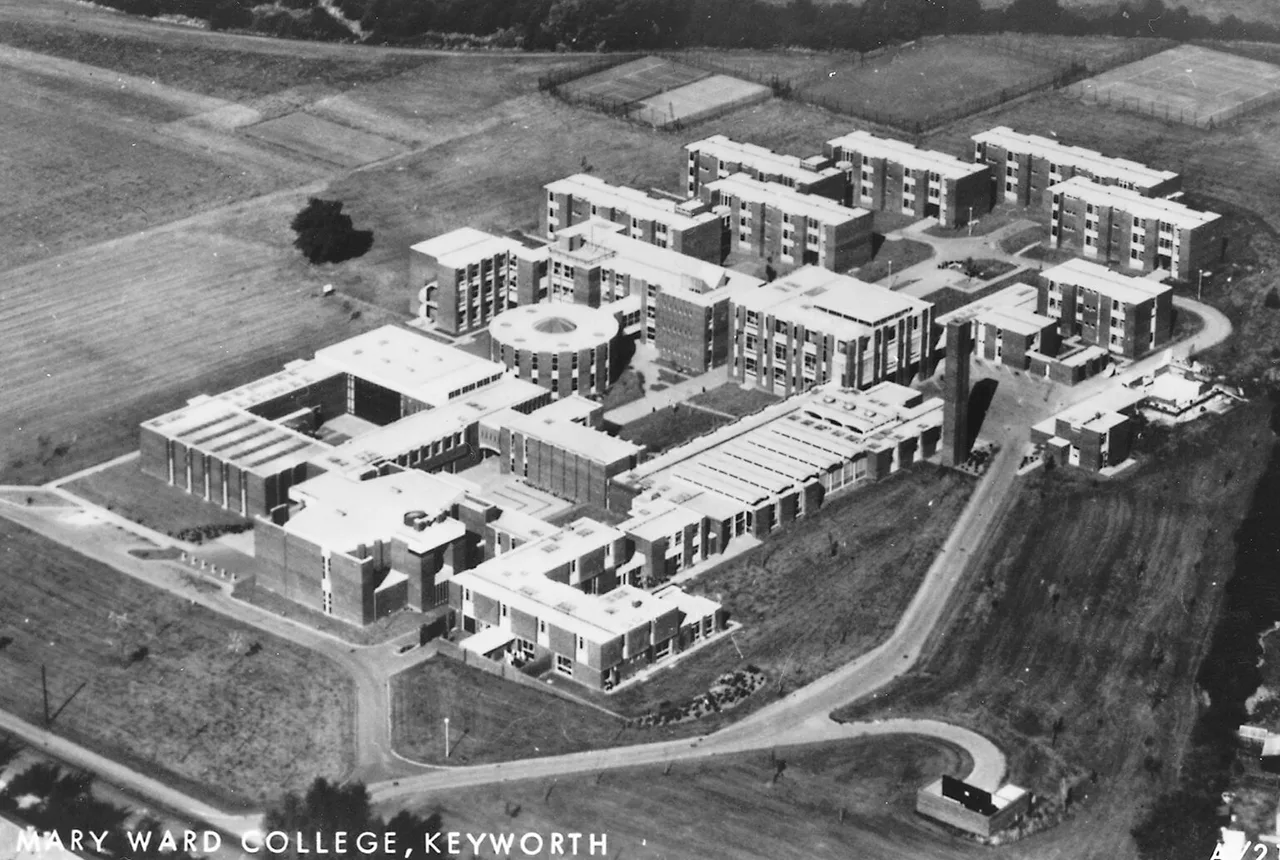
Fifty years on the site
The survey’s own timeline picks out these milestones:
| Year | What happened |
|---|---|
| 1976 | Site bought on 1 September; first 30 staff arrive in October |
| 1985 | Headquarters officially opened on 8 October, the survey’s 150th anniversary year; the National Geological Repository opens |
| 1997 | The Princess Royal visits the cartography team |
| 2002 | Core store and records areas extended |
| 2005 | First 3D visualisation facility installed |
| 2009 | William Smith Building opened by the Princess Royal |
| 2010 | Repository extended, with high-density racking for drillcore; Sir David Attenborough speaks at the survey’s 175th anniversary |
| 2012 | James Hutton Building opened, with the Geological Walk |
| 2021 and 2022 | More than 1,700 solar panels installed over the main car park |
The National Geological Repository is the part of the site with national reach. It is the UK’s most comprehensive collection of geological material. The survey says it holds more than 600km of drillcore and 16 million specimens from the UK and its continental shelf.
The William Smith Building covers 3,000 square metres. When it opened, the survey says, it was the UK’s largest wooden-framed, open-plan office building.
What the survey said
Dr Karen Hanghøj, the BGS director, said the survey was “proud of our long connection with Keyworth and Nottinghamshire”.
“We look forward to the next 50 years of scientific discovery and innovation delivered as part of a vibrant and growing community,” she said.
What it means for you
- Around 500 people work on the site, which makes the survey a large employer for a village of Keyworth’s size.
- It is a research site, not a visitor attraction. The anniversary exhibition was put on for former staff.
- Much of its data is free to look at. The survey’s GeoIndex map viewer shows geological maps and borehole records, including for Rushcliffe.
Have your say